
When Should Men Replace Underwear? 7 Clear Signs
Posted by
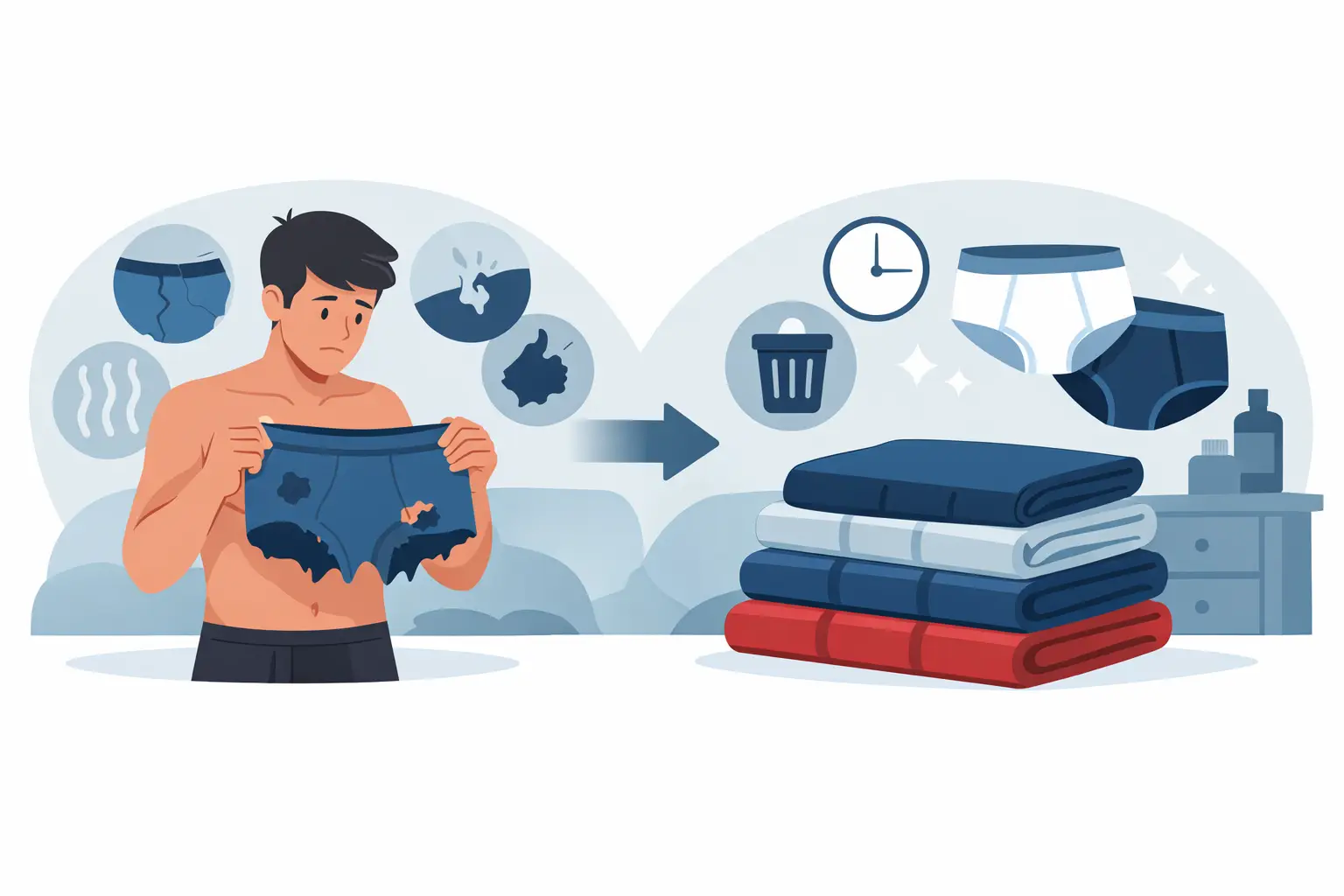
Your underwear is the first layer you put on and the last thing you should have to think about. So when should men replace underwear? Not only when a pair has a visible hole. By then, comfort, support, and shape have often been gone for months.
A good pair should feel secure without squeezing, stay in place through movement, and hold its shape after washing. When it starts failing at any of those jobs, it is no longer doing the work.
The 7 signs it is time for new underwear
1. The waistband has lost its grip
A waistband that rolls, folds, slides down, or leaves you constantly readjusting is finished. Elastic does not recover forever. Heat, friction, sweat, and regular washing gradually reduce its tension.
This is more than a minor annoyance. A weak waistband changes the fit of the entire boxer. The pouch can sit too low, the legs can ride up, and the garment starts moving independently from your body. That is not confidence in motion. That is distraction.
2. The fabric is thin, rough, or permanently stretched
Look at the fabric in bright light. If it has become visibly thin, see-through, pilled, or uneven, the fibers are worn down. A pair may still be technically intact, but it will not offer the softness, breathability, or coverage it once did.
Pay attention to how it feels, too. Underwear that was once smooth but now feels rough against the skin can create unnecessary friction during a long workday, a flight, or a training session. Premium fabrics should feel like a reliable base layer, not a compromise you tolerate.
3. It no longer stays in position
Legs that creep upward, a pouch that shifts, or fabric that bunches beneath trousers are clear fit failures. Sometimes this happens because the underwear has worn out. Other times, it reveals that the cut was never right for your body or lifestyle.
A boxer built for movement needs to move with you. If you are adjusting it after walking, sitting, squatting, or climbing stairs, replace it with a better-engineered fit rather than buying another version of the same problem.
4. Seams are fraying or rubbing
Loose threads around the leg openings, crotch, or waistband are early warnings. Once seams begin to break down, the garment loses structure quickly. More importantly, rough or twisted seams can rub in places where you do not want extra friction.
Do not wait for a seam to split completely. Retiring a pair at the first signs of structural wear is usually smarter than discovering the failure halfway through a busy day or a trip.
5. The color and finish look tired
Fading alone does not always mean underwear needs replacing. A well-made black pair may soften slightly over time and still perform well. But heavy fading often appears alongside fiber damage, especially in lower-quality cotton blends and garments exposed to hot washes or high-heat drying.
If a pair looks dull, feels dry, and has lost its shape, the finish is telling the truth. It has had its run.
6. Odor lingers after washing
Freshly washed underwear should smell clean. If odor remains after a proper wash, bacteria, body oils, and detergent buildup may be holding on to tired fibers. This is especially common in synthetic fabrics that trap odor or in pairs that have been overused without enough rotation.
Before throwing them out, try washing according to the care label with the right amount of detergent and skipping fabric softener. If the smell persists, do not overthink it. Replace the pair.
7. You avoid wearing it
This is the simplest test. If you consistently leave a pair at the back of the drawer because it feels tight, loose, scratchy, hot, or unreliable, it has already failed the standard.
Your essentials should earn their place. Keeping uncomfortable underwear because it is not visibly destroyed is how an average drawer stays average.
How often should men replace underwear?
There is no single date on the calendar. For most men, replacing regularly worn underwear every six to 12 months is a practical range. The exact timing depends on how many pairs you own, how often you wear each pair, the fabric, the quality of construction, and how you wash and dry them.
A man with seven pairs who wears and washes each one constantly will see wear sooner than a man with 14 to 20 pairs in rotation. Training frequently, traveling in hot weather, or working active days can also accelerate wear. Sweat and friction are part of the job, but they are still hard on fabric and elastic.
Quality changes the equation. Better materials and stronger construction can extend the useful life of a pair, but premium underwear is not immortal. The goal is not to make one pair last forever. It is to make every wear feel right for longer.
Underwear replacement is not just about hygiene
Clean underwear matters, obviously. But replacing underwear is often framed as a hygiene issue when it is really a performance issue, too. A freshly washed pair with flattened elastic and stretched fabric is clean, but it may still offer poor support and an uncomfortable fit.
That distinction matters because the effects add up. Poorly fitting underwear can pull your attention away from work, make movement feel restricted, create chafing, and disrupt the clean line of your clothes. The right pair disappears once you put it on. It supports without demanding attention.
Modal is a strong option for everyday rotation because it is exceptionally soft and breathable, with a smooth feel that suits long days. But material alone is not enough. The waistband, pouch construction, leg length, stitching, and recovery all determine whether a pair still performs after repeated wear.
Build a rotation that lasts
The fastest way to wear out underwear is to own too little of it. A deeper rotation gives each pair time between wears and washes, reducing stress on the fabric and elastic. For most men, 10 to 14 dependable pairs is a strong baseline. If you train often, travel regularly, or prefer changing after workouts, keeping a few extra pairs makes sense.
Separate your drawer into three categories: everyday pairs you trust, workout-specific pairs if you use them, and pairs ready to retire. Do a quick drawer check every few months. Stretch the waistband, inspect the seams, and be honest about what you actually reach for.
This approach also makes purchasing simpler. Instead of panic-buying a random multipack after several pairs fail at once, replace worn pieces in planned batches. You get a more consistent fit, a cleaner drawer, and fewer weak links in your daily routine.
Make better underwear last longer
Care has a real impact, especially on elastic and soft premium fibers. Wash underwear after each wear, but avoid treating every load like heavy-duty laundry. Cold or warm water is generally gentler than hot water, and a mild detergent helps preserve the fabric’s feel.
High dryer heat is often the biggest enemy. It can weaken elastic, shrink fibers, and make soft fabric feel less refined over time. Air-drying is the gentlest option. If you use a dryer, choose low heat and remove garments promptly.
Avoid overloading the machine, which creates extra friction, and avoid using too much detergent. More soap does not mean cleaner underwear. It can leave residue that makes fabric feel stiff and may contribute to lingering odor.
When should men replace underwear if it still looks fine?
Trust fit and feel over appearance. A pair can look nearly new in the drawer yet have weakened stretch, reduced support, or a waistband that loses tension by lunchtime. If it no longer performs the way it did when new, it is time to move on.
That is the standard worth keeping: not whether the underwear can survive another wash, but whether it still supports the way you move. A strong drawer starts with fewer excuses and better essentials. He.X Underwear is built around that idea – precision where it counts, comfort that holds up, and a fit that lets you get on with the day.

Recent articles
-
When Should Men Replace Underwear? 7 Clear Signs
When should men replace underwear? Learn the signs of worn-out pairs, how fabric and fit affect comfort, and how to make better basics last longer overall.
-
How to Find Supportive Boxers That Move With You
Learn how to find supportive boxers with a secure fit, breathable modal fabric, and lasting comfort for work, training, travel, and long days in motion.

Leave a Reply