
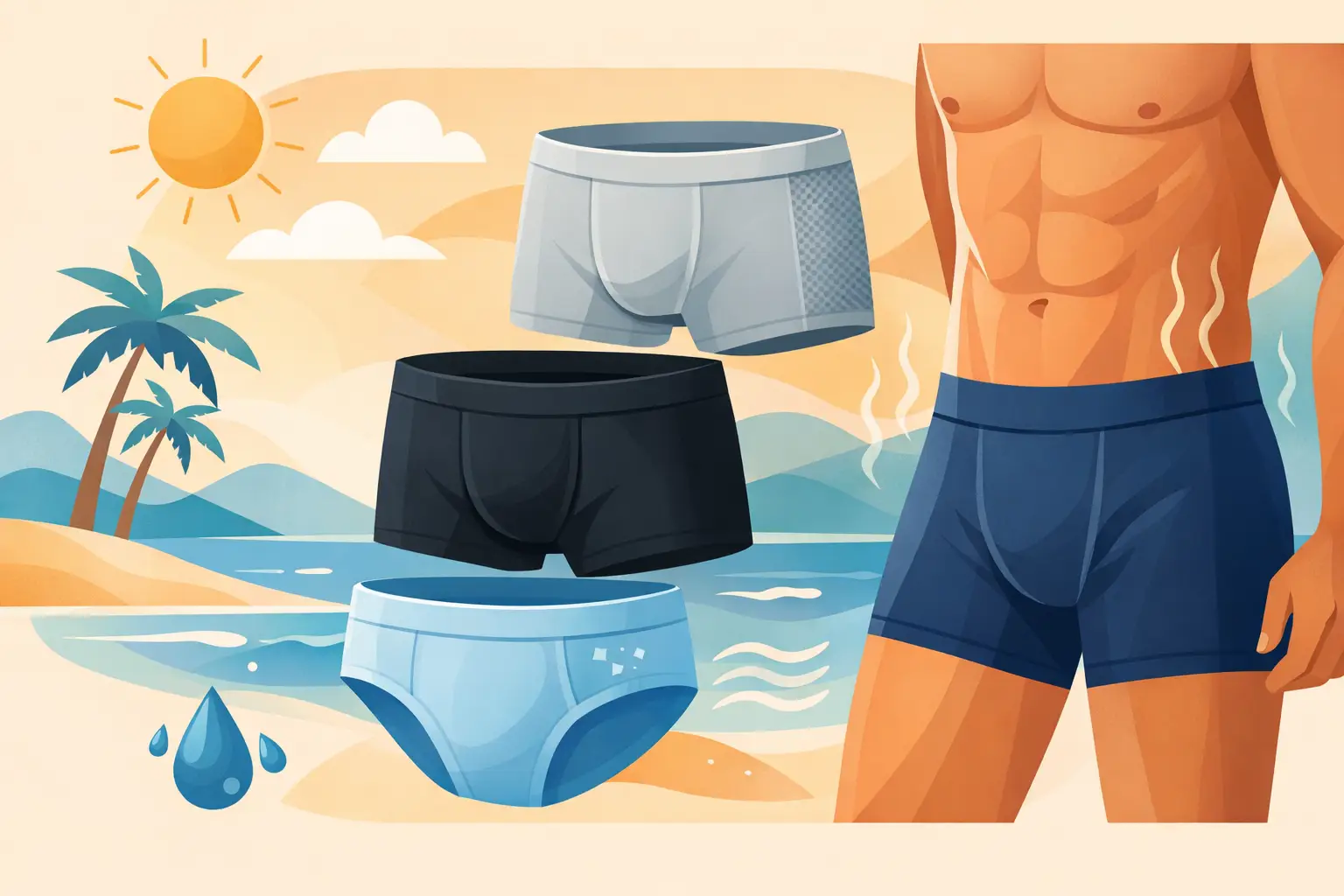
Best Underwear for Hot Weather for Men
Posted by
Step outside on a humid morning, sit through a long commute, then add a workout or a full day on your feet. That is when the best underwear for hot weather stops being a small wardrobe choice and starts becoming a performance decision. If your base layer traps heat, holds sweat, or shifts when you move, you feel it all day.
Most men blame summer discomfort on the weather itself. Fair enough. But poor underwear usually makes the problem worse. Heavy cotton stays damp. Cheap synthetics can feel slick, hot, and overstimulating. A loose fit rides up. A tight fit locks in heat. In hot conditions, details matter.
What makes the best underwear for hot weather
Hot-weather underwear has one job: help your body regulate better while keeping you supported. That means the right pair needs to manage moisture, reduce friction, and stay stable in motion. Softness matters too, but softness alone is not enough if the fabric gets swampy after an hour.
Fabric is the first thing to get right. Lightweight modal tends to perform especially well because it feels cool against the skin, breathes better than many heavier fabrics, and stays smooth when temperatures rise. It also has a clean, refined hand feel that does not come with the scratch or stiffness some men accept from cheaper pairs. For everyday wear, travel, and long summer days, that balance is hard to beat.
Fit comes next. Good hot-weather underwear should support without squeezing. You want a shape that stays close to the body but does not create pressure points around the thighs or waistband. When fit is dialed in, the underwear works with your movement instead of fighting it.
Then there is construction. Flat seams, a secure pouch, and a waistband that holds without digging all make a difference once sweat enters the equation. Heat exposes weak design fast. If a pair bunches, twists, or loses shape by midday, it is not built for real use.
Fabric matters more than most men think
When men look for summer underwear, many start with the wrong question. They ask whether they should choose cotton or synthetic. The better question is what fabric actually feels dry, breathable, and stable against your skin for hours.
Cotton has a reputation for comfort because it is familiar and soft at first wear. In hot weather, though, it often falls short. It absorbs moisture and tends to stay wet longer, which can leave you feeling heavier, warmer, and less fresh as the day goes on. For low-sweat situations, cotton can still be fine. For commuting, walking, training, travel, or long days in the heat, it is often not the strongest choice.
Basic polyester blends can go the other way. They may dry quickly, but not all of them breathe well, and some trap odor or feel too slick. If the fabric lacks softness or stretch control, quick-drying does not mean comfortable. Performance is more than a spec sheet.
Modal stands out because it covers several needs at once. It is soft, light, breathable, and naturally smooth. That smoothness matters in hot weather because less surface friction means less irritation during movement. A premium modal blend can also hold shape well, which helps maintain support instead of turning loose after repeated wear.
There is a trade-off, of course. Not every modal pair is equal. If the blend is weak or the construction is poor, great fabric alone will not save it. But when the material and fit are engineered together, the result feels like a serious upgrade.
Best underwear for hot weather means less friction, not just less sweat
A lot of hot-weather discomfort starts with rubbing. Sweat makes skin more sensitive, and movement multiplies the problem. That is why men who walk a lot, travel often, or train regularly should care about more than moisture management.
A supportive pouch helps keep everything in place without crushing. That reduces skin-on-skin contact and keeps movement controlled. Boxer briefs usually perform better here than loose boxers because they provide structure. Briefs can also work for some men, especially if they prefer less fabric on the thigh, but the fit has to be exact. Too tight and they trap heat. Too loose and support drops off.
Leg length matters more than many brands admit. Slightly longer boxer briefs can help prevent ride-up and reduce chafing on the inner thigh. But too much length can feel warmer under slimmer shorts or pants. The right choice depends on your build, how much you move, and what you wear over them.
This is where premium construction earns its keep. Clean seams, controlled stretch, and a cut built for motion all matter more in summer because the margin for error is smaller. When heat rises, average underwear feels worse faster.
The fit you want in warm weather
The best fit for hot weather feels almost invisible, but not loose. That sounds simple. It is not. Underwear that disappears in the right way usually has enough compression to stay put, enough stretch to move freely, and enough shape to keep support where it belongs.
Start with the waistband. It should sit securely without pinching. A heavy waistband can trap heat, while a weak one slides and folds. Neither is worth tolerating. A refined waistband does its job quietly.
Then check the pouch and seat. If fabric pulls across the front, sizing is probably off or the cut is too flat. If you constantly readjust, support is missing. In hot weather, every readjustment becomes more noticeable because sweat amplifies friction.
Finally, think about your day. Office work, city walking, travel, and gym sessions all stress underwear differently. If you move a lot, lean toward a supportive boxer brief in a breathable premium fabric. If your day is mostly low movement and you run hot naturally, a lighter cut may suit you better. There is no single perfect answer for every man. There is a better answer for how you actually live.
What to avoid when shopping
The wrong pair usually reveals itself fast. Thick fabric is an obvious problem, but it is not the only one. Overbuilt underwear can feel protective in theory and oppressive in practice. Extra panels, bulky stitching, and heavy waistbands often create more heat than they solve.
You should also be careful with pairs marketed only around moisture-wicking. That phrase sounds good, but it can hide a rough fabric, weak support, or a shape that does not stay in place. If the underwear feels technical but not comfortable, you will not want to wear it for long days.
Cheap multipacks are another common miss. They can seem efficient, but hot weather exposes shortcuts in fabric quality and construction quickly. Waistbands stretch out, legs ride up, and softness disappears after a few washes. A better pair costs more upfront and usually gives more back.
How to choose the right pair for your routine
If you commute, sit for long periods, and want all-day comfort, prioritize softness, breathability, and a stable fit. If you train or stay active, add stretch retention and a more supportive pouch to the list. If you travel often, odor control, quick drying, and shape retention become more important.
For most men, the sweet spot is a premium boxer brief made from a breathable modal-rich fabric with enough stretch to move cleanly. That combination covers daily wear, summer weekends, and long travel days without feeling like specialized gear. It is performance without noise.
That is also why brands built around fabric and fit tend to outperform brands built around trends. The best underwear for hot weather is not flashy. It is precise. It stays cool, moves well, and keeps its shape. He.X Underwear leans into that standard with a clean, performance-minded approach that makes sense for men who expect more from what they wear closest to the skin.
A strong base layer changes how the rest of the day feels. When your underwear stays dry, smooth, and supportive, you stop thinking about it. In hot weather, that is not a luxury. It is the difference between getting through the day and moving through it with confidence.

Recent articles
-
When Should Men Replace Underwear? 7 Clear Signs
When should men replace underwear? Learn the signs of worn-out pairs, how fabric and fit affect comfort, and how to make better basics last longer overall.
-

How to Find Supportive Boxers That Move With You
Learn how to find supportive boxers with a secure fit, breathable modal fabric, and lasting comfort for work, training, travel, and long days in motion.

Leave a Reply