
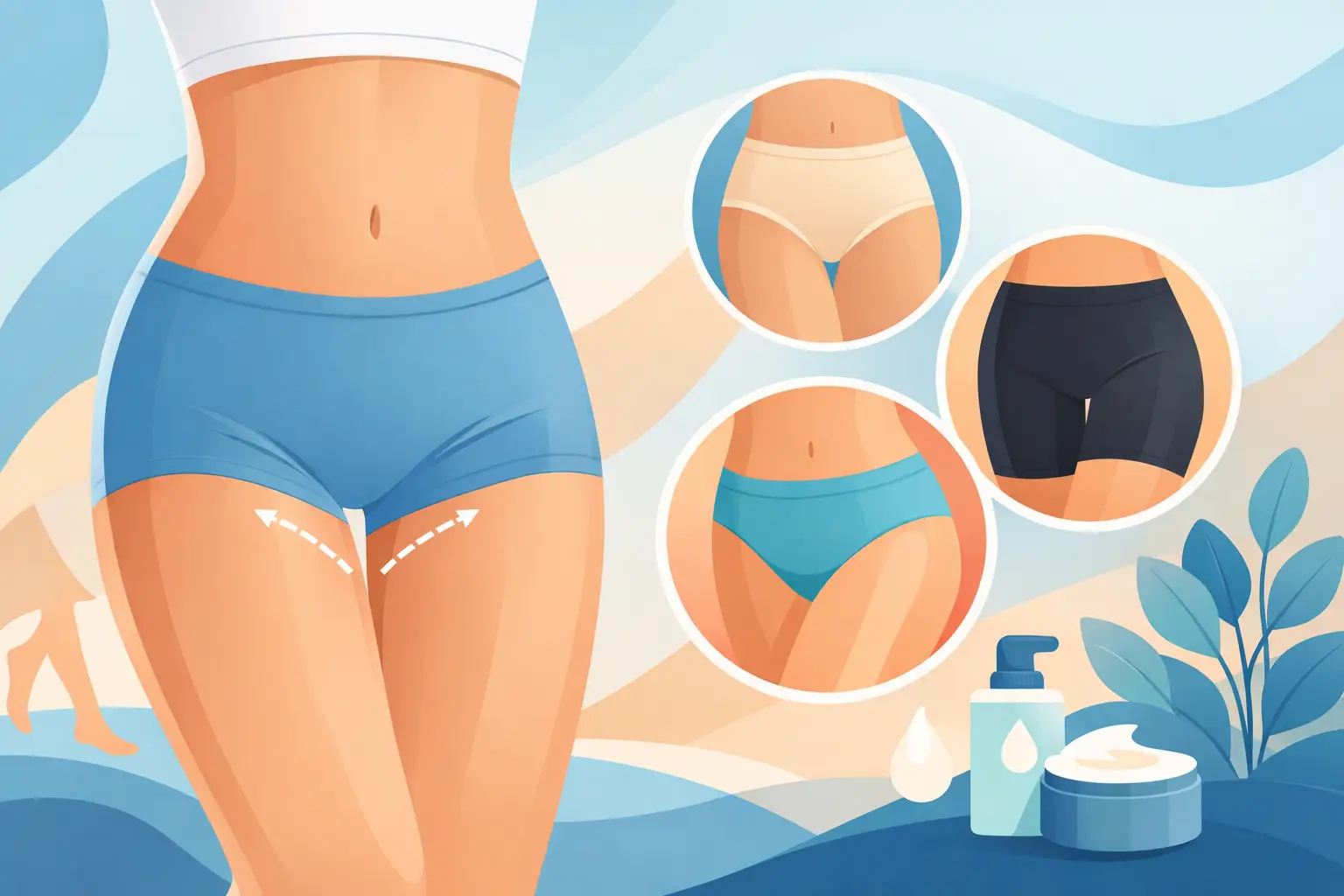
What Underwear Prevents Leg Rub? Find the Right Fit
Posted by
A long walk to work, a hard training session, a packed travel day – leg rub can turn normal movement into a distraction fast. If you are asking what underwear prevents leg rub, the answer is not simply “boxers.” It is underwear with enough leg coverage to stay in place, fabric that moves cleanly against skin, and a fit that supports without gripping.
The wrong pair bunches at the inner thigh, rides up under pants, holds sweat, and creates friction with every step. The right pair disappears. That is the standard.
Why leg rub starts in the first place
Leg rub, often called thigh chafing, happens when skin repeatedly rubs against skin or fabric during movement. Heat and moisture make the problem worse. Add underwear that rides up, shifts at the crotch, or loses its shape by midday, and you have a friction point that keeps working against you.
It is not only an issue for runners or men with larger thighs. You can feel it during a commute, on a humid day, while walking around a city, cycling, lifting, or sitting for long stretches and then getting up to move. Body shape matters, but construction matters too.
Short, loose boxer shorts leave the upper thigh exposed and offer little control. Briefs provide support but do not create a fabric barrier between the thighs. For most men dealing with rubbing, boxer briefs with a longer, stable leg are the stronger starting point.
What underwear prevents leg rub most effectively?
A well-made boxer brief is usually the best choice because it combines support with thigh coverage. Look for a leg length that reaches far enough down the thigh to prevent skin-on-skin contact, without extending so far that it bunches behind the knee or under slim pants.
For many men, a mid-thigh inseam is the practical sweet spot. It gives the inner thigh a protective layer while keeping the profile clean under jeans, chinos, shorts, and training gear. If you have muscular legs or know your underwear rides up easily, a slightly longer boxer brief can offer more reliable coverage.
The key word is stable. Length alone does not solve chafing if the legs roll upward after ten minutes of walking. Underwear should hold its position through normal movement, not require a reset every time you stand, squat, or take a long stride.
Boxer briefs beat loose boxers for friction control
Loose boxers have their place if maximum airflow is your priority at home or overnight. But for active days, their open cut allows fabric to fold and shift. They can also leave the thighs unprotected when you walk.
Boxer briefs sit closer to the body, reducing loose fabric and keeping coverage where it belongs. That closer fit also helps prevent the fabric from twisting under trousers. The trade-off is that a poor-quality boxer brief can feel restrictive, especially if it uses stiff fabric or an overly tight waistband. Fit and material separate a performance essential from an uncomfortable squeeze.
Longer legs work only when they stay down
A longer leg is often recommended for leg rub, but it is not a magic feature. If the leg opening is too tight, it can creep upward. If it is too loose, it can roll or bunch. If the fabric lacks recovery, it may fit well in the morning and lose control later in the day.
A balanced leg opening uses enough stretch to move with your thigh without cutting into it. The goal is secure contact, not compression. You should be able to climb stairs, sit at a desk, and walk at pace without feeling the fabric migrate upward.
Fabric makes the difference when heat builds
Friction gets worse when your underwear stays damp. That is why fabric matters as much as cut. Heavy cotton can feel familiar and breathable at first, but it can retain moisture and become rougher against the skin once sweat enters the equation.
Modal is a strong choice for everyday anti-chafing underwear. It feels notably soft, has a smooth surface, and manages moisture better than many basic cotton options. Less trapped moisture and less abrasive texture mean fewer conditions that encourage rubbing.
A modal blend with a measured amount of stretch is especially effective. The modal brings softness and breathability; the stretch fibers help the garment recover its shape. That combination supports movement without turning the underwear into a rigid base layer.
Synthetic performance fabrics can also work well for high-output training, particularly when they are designed to dry quickly. The trade-off is feel. Some technical fabrics can run warmer, hold odor, or feel less refined for an entire day at work or while traveling. For all-day use, a soft modal boxer brief offers a better balance of comfort, support, and polish.
Fit is your first line of defense
Even premium fabric cannot compensate for the wrong size. Underwear that is too small creates pressure at the leg openings and waistband, increasing the chance of rolling and chafing. Underwear that is too large shifts around, allowing folds to form exactly where you need a smooth layer.
Start with your actual waist measurement rather than the size you wore years ago. Then pay attention to your thighs. Men with powerful quads often need a cut that accommodates the upper leg without forcing the waistband to sit lower or the legs to climb higher.
A good boxer brief should feel supportive around the pouch, smooth through the seat, and secure around the thighs. There should be no excess fabric at the crotch and no sharp compression lines at the leg. When the fit is right, you stop thinking about it.
Details that reduce rubbing over a full day
Anti-chafing performance is built from small decisions. Flat or carefully placed seams reduce raised edges that can irritate the inner thigh. A contoured pouch prevents unnecessary shifting and keeps the front supported without flattening or crowding. A waistband that stays level keeps the whole garment in position.
Pay attention to construction after washing, too. A pair that feels great once but stretches out quickly is not built for repeat wear. Durable recovery is part of comfort. The fabric, waistband, and leg openings need to return to shape after washing so the fit remains consistent.
This is where premium underwear earns its place. He.X Underwear focuses on soft modal fabric and an engineered boxer-brief fit because everyday comfort is not an extra feature. It is the job.
Match the pair to the day ahead
The best answer depends on how you move. For office days, travel, and daily wear, choose a mid-thigh modal boxer brief with a supportive pouch and stable legs. It stays clean under tailored pants and gives you protection when the day involves more walking than planned.
For long walks, warm-weather days, or fuller thighs, consider a longer-leg version. The added coverage can be worth it when skin contact is your main trigger. Make sure it has enough stretch and a leg opening designed to stay put.
For demanding workouts, prioritize moisture management and a close, non-restrictive fit. If you sweat heavily, rotate pairs after training rather than staying in damp underwear. No fabric can fully prevent chafing when it is soaked and left in place for hours.
If irritation has already started, give the skin time to recover. Wear clean, dry underwear, avoid harsh fabrics, and reduce friction until the area settles. Persistent rash, swelling, pain, or broken skin deserves medical advice rather than another round of trial and error.
A quick test before you commit
Do not judge anti-chafing underwear while standing still in a fitting room. Put it through movement. Walk, sit, raise a knee, squat, and take a few stairs if you can. Notice whether the leg openings stay down, whether the pouch holds you in place, and whether any seam lands at the inner thigh.
After a few hours, the test becomes clearer. Great underwear does not announce itself through pressure, heat, or readjustment. It gives you a smooth layer between your thighs, then gets out of the way.
Choose the pair that stays put when your day gets moving. Your underwear should support your stride, not make you manage it.

Recent articles
-

Are Expensive Boxers Worth It? What You Get
Are expensive boxers worth it? See how better fabric, engineered support, and lasting construction can change comfort, movement, and real value every day.
-

Underwear for Men With Big Legs That Stays Put
Underwear for men with big legs should move with you, not ride up. Learn how fit, fabric, pouch support, and construction change every day with ease.

Leave a Reply